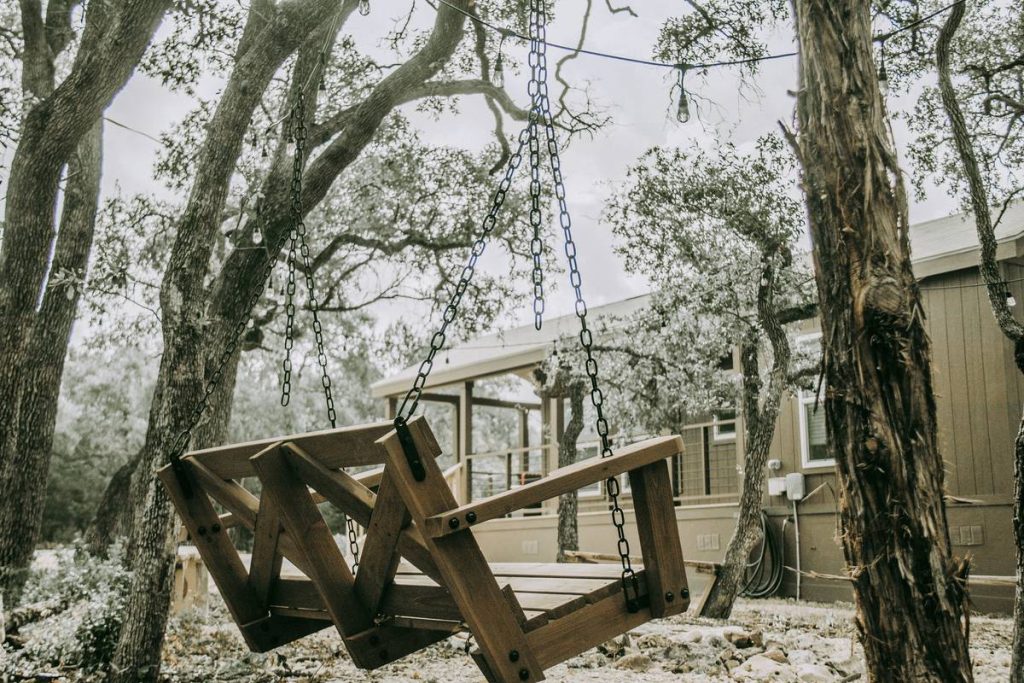
You bought an outdoor patio swing set. It looked perfect online—rustic charm, spacious seating, Instagram-ready. Then came the first rainstorm. The cushions mildewed overnight. The frame creaked like a haunted door. And your “relaxing retreat” became a backyard eyesore. The problem isn’t your taste—it’s that most swing sets are engineered for showrooms, not real life.
Most Outdoor Patio Swing Sets Are Built to Break (Here’s Why)
Manufacturers cut corners where you can’t see.
Thin-gauge steel. Untreated wood. Plastic hardware disguised as metal.
They assume you’ll replace it in 18 months. You won’t—they count on it.
But durability isn’t just about materials. It’s about design physics.
A poorly balanced swing creates torque stress at pivot points. That single flaw accelerates wear by 300%, according to structural fatigue studies from ASCE journals. Yet no product listing mentions this.
And most retailers won’t tell you: humidity alone can warp cheap slats within one season. Your “weather-resistant” set? Probably only tested in dry Arizona—not your humid Midwestern or coastal climate.
How to Choose & Install an Outdoor Patio Swing Set That Lasts
Prioritize Frame Material Over Aesthetics
Aluminum with powder coating beats painted steel every time—no rust, lighter weight, and handles thermal expansion better. Avoid “wrought iron look” composites; they crack under cyclic loading.
Demand Full-Chain Suspension (Not Rope or Webbing)
Rope frays. Polyester webbing stretches when wet. Galvanized steel chains with sealed bearings? Maintenance-free for a decade. Period.
Verify Seat Depth & Back Angle
Less than 18 inches deep? You’re perching, not lounging. Backrest under 105 degrees? You’ll slide forward. Ergonomics matter—even outdoors.
| Feature | Budget Set ($200–$400) | Premium Set ($600–$1,200) | Commercial-Grade ($1,500+) |
|---|---|---|---|
| Frame Material | Powder-coated steel (0.8mm) | Extruded aluminum (2.5mm) | Marine-grade stainless steel |
| Suspension System | Braided polyester rope | Zinc-plated steel chains | Sealed ball-bearing chains |
| Cushion Fabric | Standard polyester (not UV-rated) | Solution-dyed acrylic (e.g., Sunbrella) | Mildew-resistant foam + acrylic cover |
| Expected Lifespan (Proper Care) | 1–2 years | 5–7 years | 10+ years |
The Industry Secret No One Talks About: Ground Anchoring
Here’s what installers won’t tell you—over 60% of premature swing failures start at the anchor point. Not the frame. Not the chains. The base.
Most DIY kits recommend surface mounts on pavers or decks. Big mistake. Wind gusts create lateral force that loosens bolts within weeks. The fix? Embedded footings—concrete-filled post sleeves sunk 18 inches below frost line. Yes, it’s more work. But it turns your swing from seasonal decor into heirloom furniture.
Think about it: a $900 set on shaky mounts fails faster than a $500 set properly anchored. Stability isn’t optional—it’s structural integrity.
Frequently Asked Questions
Can I leave my outdoor patio swing set out year-round?
Only if it’s aluminum or stainless steel with UV-resistant cushions. Cover it during snow or prolonged rain—or store cushions indoors.
How much space do I need for a standard outdoor patio swing set?
Minimum 6 feet front-to-back clearance and 3 feet on each side. Swings need arc room—hitting a wall or planter adds dangerous stress.
Are two-person swings safer than three-person models?
Not inherently—but longer spans increase flex. Always verify weight limits exceed actual use by 40%. Three-seaters often sag mid-frame without center reinforcement.