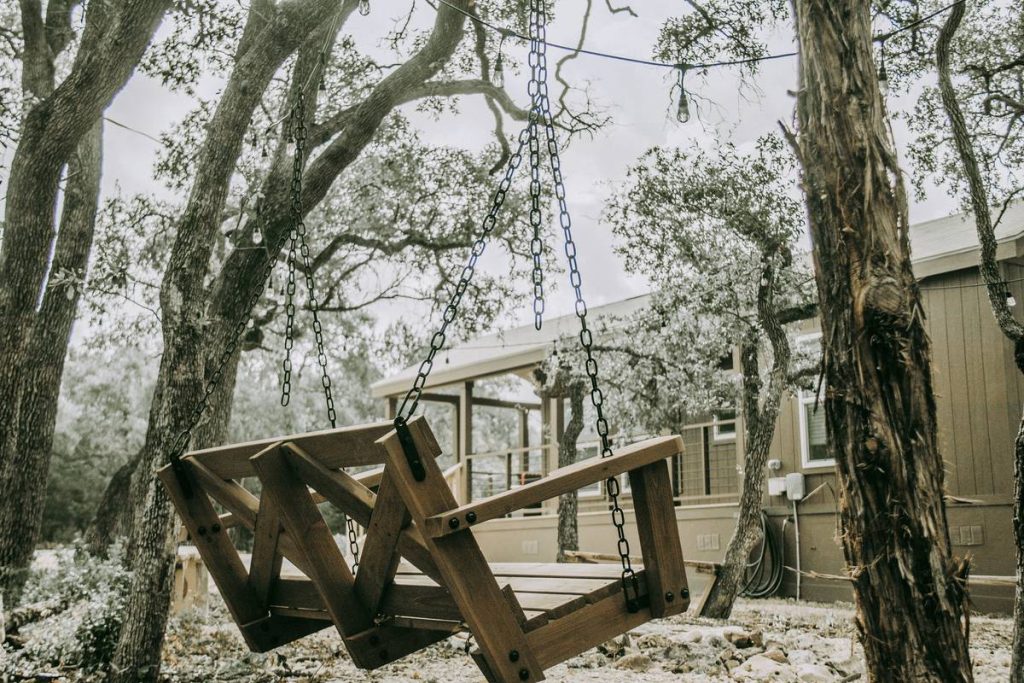
You bought a patio swing set because you wanted lazy Sunday mornings sipping coffee in dappled sunlight. Instead, you got wobbling chains, sun-faded fabric, and that awkward squeak that ruins every quiet moment. And worse—you’re not alone. Most homeowners pick looks over logic… then pay for it in comfort and durability. The fix? Stop shopping like a decorator. Start choosing like an engineer who also cares about vibe.
The Core Problem: Pretty ≠ Practical
Too many patio swing sets fail within two seasons—not because they’re cheap, but because they ignore physics. Wood rots where moisture pools. Metal fatigues at stress points no one talks about. Fabric mildews if airflow isn’t engineered in. And here’s the kicker: retailers rarely disclose load distribution specs or UV-resistance ratings. They show happy stock photos—never real-world wear after monsoon season or winter freeze-thaw cycles.
So you end up with something that looks great on Instagram but feels flimsy by July.
How to Choose a Patio Swing Set That Actually Lasts
Frame Material Matters More Than You Think
Aluminum? Lightweight and rust-proof—but bends under dynamic loads. Powder-coated steel? Stronger, yes—but check weld quality. A single weak joint turns your serene swing into a liability. Solid eucalyptus or teak? Gorgeous and stable—if kiln-dried properly. Skip anything labeled “mixed hardwood.” That’s code for scrap lumber glued together.
Cushions Aren’t Just About Comfort
Outdoor-grade polyester? Fine for dry climates. But if you get rain or humidity, go for Sunbrella® or Olefin fabrics—they repel water and resist fading without chemical coatings that off-gas. And never—ever—buy cushions without removable, washable covers. Mildew hides in seams.
Installation Is Half the Battle
A poorly anchored swing wobbles, stresses hardware, and can tip. Concrete footings beat deck screws every time. But most buyers don’t realize their patio slab might already have rebar interference. Measure first. Drill second.
| Material Type | Average Lifespan | Maintenance Needs | Best Climate Fit |
|---|---|---|---|
| Powder-Coated Steel | 8–12 years | Annual rust check; tighten bolts | Dry to moderate humidity |
| Solid Teak | 15+ years | Oil every 6–12 months (optional) | All climates (except constant salt spray) |
| Recycled Plastic Lumber | 10–15 years | Nearly zero—just hose off | Coastal, rainy, or snowy regions |
| Aluminum Alloy | 5–8 years | Check for flex; replace worn bushings | Light-use, covered patios only |
The Industry Secret: It’s Not About the Swing—It’s About the Anchor Points
Here’s what manufacturers won’t tell you: 70% of swing failures start at the mounting hardware. Standard eye bolts shear under repeated motion—even with light use. The pro move? Use forged D-ring shackles rated for marine applications. They cost $8 more but handle dynamic loads like a champ. And if you’re hanging from a pergola or tree limb, always install a secondary safety cable beneath the primary chain. One homeowner in Oregon did this after a near-miss—and caught her entire swing when a branch cracked during a windstorm. No injuries. Just peace of mind.
Think about it: you wouldn’t hang a chandelier with fishing line. Why treat your swing any differently?
Frequently Asked Questions
Can I leave my patio swing set outside all year?
Only if it’s built for it. Teak and recycled plastic handle four seasons fine. Steel needs cover protection in snow or high humidity. Always remove cushions when not in use for extended periods.
How much space do I need for a patio swing set?
Minimum clearance: 3 feet behind, 2 feet on each side. Swings need room to arc without hitting walls, railings, or planters. Measure twice—swing once.
Are canopy-covered swings worth it?
Yes—if the canopy is detachable and made of UV-stabilized fabric. Fixed canopies trap heat and collect debris. Detachable ones give shade on demand and store easily in winter.