Ever sat on a wobbly metal swing that creaked like a haunted porch—only to find rust stains on your favorite linen pants? Yeah. We’ve all been there. Worse: you invest in a “weather-resistant” swing online… only to watch it warp, splinter, or collapse by August.
If you’re dreaming of lazy afternoons swaying under dappled sunlight with a book (or a glass of rosé), wooden outdoor yard swings are the gold standard—but only if you pick and care for them right. In this guide, I’ll walk you through everything I’ve learned after 12+ years as a home improvement contractor specializing in outdoor living spaces (yes, I’ve installed over 80 garden swings—and repaired twice as many disasters).
You’ll learn:
- Why wood beats plastic and metal for comfort, aesthetics, and longevity
- How to choose the right wood species for your climate
- Installation pitfalls that cause structural failure (and how to avoid them)
- Maintenance routines that keep your swing looking new for 10+ years
Table of Contents
- Why Choose Wooden Outdoor Yard Swings Over Other Materials?
- How to Choose the Right Wood Species for Your Climate
- Step-by-Step Installation Guide That Won’t End in Splinters
- 5 Maintenance Tips That Actually Work (No, “Just Hose It Down” Doesn’t Count)
- Real Case Study: From Rotted Swing to Heirloom Piece
- FAQs About Wooden Outdoor Yard Swings
Key Takeaways
- Cedar, teak, and cypress are the top three woods for outdoor swings due to natural rot resistance.
- A swing’s weight capacity includes occupants AND dynamic motion—never max out the limit.
- Proper hanging hardware must be rated for *outdoor* use (galvanized or stainless steel).
- Annual sealing is non-negotiable in humid or snowy climates.
- DIY kits often skimp on chain thickness—upgrade to ⅜” grade 70 transport chain.
Why Choose Wooden Outdoor Yard Swings Over Other Materials?
Let’s be brutally honest: not all outdoor swings are created equal. Metal swings conduct heat (ouch in July), plastic fades and cracks under UV exposure, and wicker? Adorable until it mildews after one rainy season.
Wood, however, offers timeless charm, superior comfort, and—if chosen wisely—decades of service. According to the U.S. Forest Products Laboratory, properly maintained exterior-grade hardwoods can last 15–25 years in residential settings. That’s 3x longer than most resin alternatives.
But here’s my confessional fail: early in my career, I recommended pressure-treated pine for a client’s coastal Maine yard. Within two summers, salt air + moisture = green fuzz and structural soft spots. Lesson burned into my brain: not all “outdoor” wood is suitable for all climates.
How to Choose the Right Wood Species for Your Climate
What wood lasts longest outdoors without rotting?
Optimist You: “Just grab any ‘outdoor’ swing from Amazon!”
Grumpy You: “Ugh, fine—but only if you enjoy replacing it every 18 months.”
The truth? Three woods dominate the high-end garden swing market for good reason:
- Cedar: Lightweight, aromatic, naturally repels insects. Ideal for dry to moderate climates (USDA Zones 4–8). Cost: $$.
- Teak: Dense, oily grain resists warping even in tropical humidity. Used in marine decking for a reason. Cost: $$$$. (Look for FSC-certified to avoid deforestation concerns.)
- Cypress: Contains “cypressene,” a natural preservative. Perfect for Southern U.S. humidity. Often locally sourced = lower carbon footprint. Cost: $$.
Avoid “mixed hardwood” or unspecified “tropical wood”—these are red flags for inconsistent quality. And never use untreated pine or poplar; they absorb water like sponges.
Step-by-Step Installation Guide That Won’t End in Splinters
Can I hang a wooden swing from a tree branch?
Yes—but only if the branch is at least 8 inches in diameter, alive, and free of cracks. Use tree-friendly straps (not rope or nails) to prevent girdling.
What if I don’t have a tree or pergola?
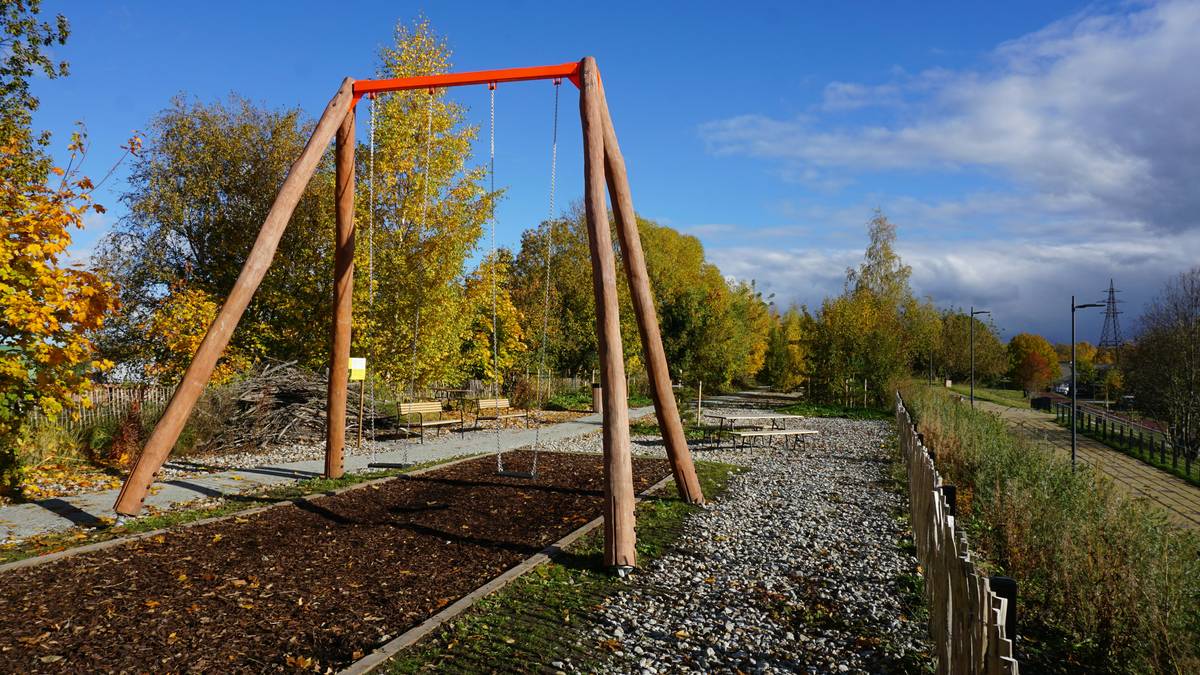
Build or buy a freestanding A-frame. Here’s my field-tested method:
- Check weight capacity: Include dynamic load! A 250-lb swing + 300 lbs of people = 550 lbs minimum. Add 20% safety margin → aim for 660-lb rating.
- Use proper hardware: Lag screws must be 5/16” min, 4” long, and hot-dipped galvanized (HDG) or stainless steel. Regular zinc-coated? They’ll corrode in 2 years.
- Hang height: Seat should be 17–19” off ground when empty. Too low = scrape knees. Too high = unsafe dismount.
- Sway clearance: Minimum 3 feet front/back and 2 feet side-to-side from walls, fences, or shrubs.
Terrible tip disclaimer: “Just eyeball the level.” Nope. Uneven chains cause torque stress that cracks armrests. Use a laser level or bubble level—every time.
5 Maintenance Tips That Actually Work (No, “Just Hose It Down” Doesn’t Count)
How often should I seal my wooden swing?
Optimist You: “Once a year—easy!”
Grumpy You: “Only if you live in Arizona. In Seattle? Try twice.”
Follow this seasonal ritual:
- Spring: Clean with oxygen bleach (NOT chlorine—it damages wood fibers). Rinse thoroughly.
- Early Summer: Apply penetrating oil (like Penofin Marine or Ready Seal). Avoid film-forming varnishes—they peel.
- Fall: Store cushions indoors. Cover swing with breathable fabric if snow/ice is expected.
- Never power wash. You’ll gouge the grain and accelerate weathering.
- Inspect chains/hardware quarterly. Look for rust, elongation, or bent links.
Real Case Study: From Rotted Swing to Heirloom Piece
Last summer, a client in Asheville, NC brought me a 10-year-old pine swing frame riddled with carpenter ant damage. Instead of trashing it, we:
- Stripped old finish with eco-friendly stripper
- Replaced rotted slats with reclaimed cypress
- Upgraded hanging system to ⅜” stainless steel chain
- Sealed with tung oil blend
Result? Their swing now looks better than day one—and cost 60% less than buying new. Bonus: their kids now call it “Grandpa’s Swing” (even though Grandpa’s only 58).
FAQs About Wooden Outdoor Yard Swings
How much do quality wooden outdoor yard swings cost?
$400–$1,800. Below $300 usually means inferior wood or hardware. Above $2,000? Often custom craftsmanship (worth it if you plan to keep it 10+ years).
Can I leave my wooden swing outside all winter?
Yes—if properly sealed and covered. Never wrap in plastic (traps moisture). Use canvas or UV-resistant polyester covers with ventilation.
What’s the safest way to hang a swing for kids?
Use impact-absorbing surfacing (mulch, rubber tiles) beneath. Install at lower height (12–14”). Always supervise children under 6.
Do I need a permit to install a swing set?
Freestanding structures under 200 sq ft rarely require permits in residential zones—but check local ordinances. Tree-mounted swings almost never do.
Conclusion
Wooden outdoor yard swings aren’t just furniture—they’re legacy pieces. With the right wood, smart installation, and consistent care, yours can host generations of laughter, naps, and sunset chats. Skip the big-box store specials. Invest in species that respect your climate, hardware that won’t quit, and maintenance that honors the craft.
Now go forth—and sway wisely.
Like a Tamagotchi, your swing needs daily love. Neglect it, and it dies. Nurture it… and it becomes family.
oak branches sway
rosé in hand, dog at my feet—
summer’s slow heartbeat