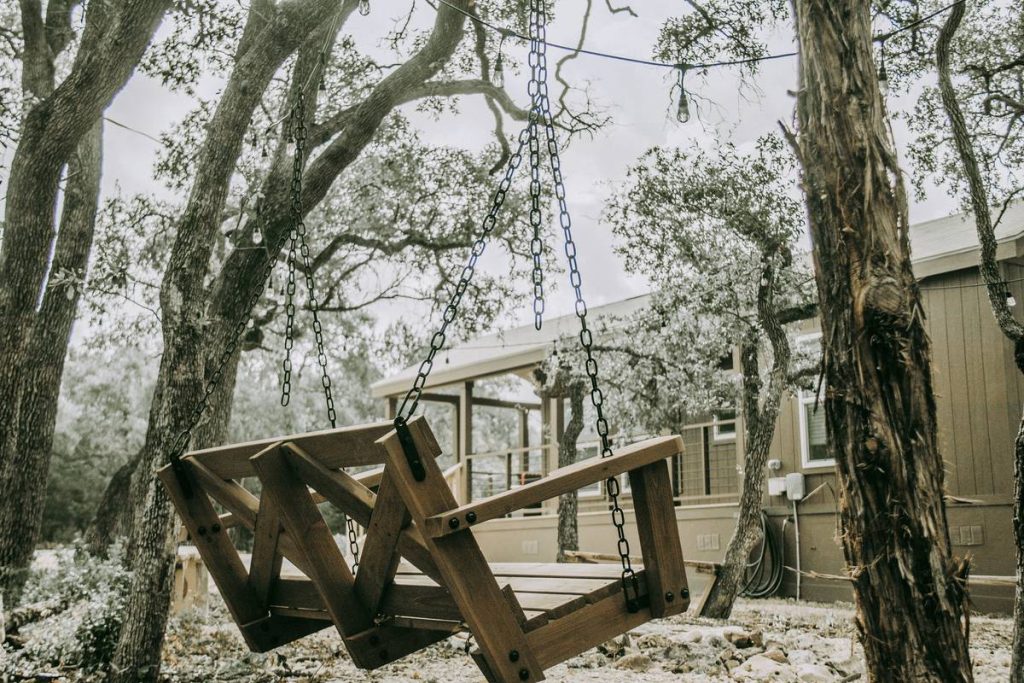
Ever sat on a creaky, wobbly swing that groaned louder than your knees after yoga—only to realize it was held together by hope and a single rusty bolt? Yeah. We’ve all been there.
If you’re dreaming of lazy Sunday mornings sipping coffee while gently swaying beneath dappled sunlight—or romantic evenings wrapped in a blanket with someone special—you need more than just any swing. You need a wooden garden swing set: timeless, sturdy, and built to become part of your family’s story.
In this guide, you’ll discover exactly how to pick a wooden garden swing set that balances beauty, safety, and longevity. We’ll cover:
- The critical mistakes people make when buying outdoor swings (including one I learned the hard way)
- Step-by-step criteria for choosing wood type, hardware, and design
- Real-world examples of swings that lasted 10+ years vs. those that rotted in two
- Answers to your most-asked questions—from weight limits to weatherproofing
Table of Contents
- Why Wooden Garden Swings Outshine Plastic and Metal
- How to Choose the Perfect Wooden Garden Swing Set
- 5 Essential Tips to Make Your Swing Last Decades (Not Seasons)
- Real-Life Case Study: My Grandfather’s Oak Swing—Still Going Strong at 22
- Wooden Garden Swing Set FAQs
Key Takeaways
- Hardwoods like teak, cedar, and pressure-treated pine are the only woods truly suited for outdoor swings.
- Avoid “budget” swing sets with hidden flaws: undersized chains, untreated joints, or flimsy A-frames.
- Annual maintenance—cleaning, sealing, and bolt checks—is non-negotiable for longevity.
- The ideal swing seat is 18–20 inches deep with a slight backward tilt (4–6°) for ergonomic comfort.
- Always anchor your swing set to the ground—wind gusts over 30 mph can topple even heavy units.
Why Wooden Garden Swings Outshine Plastic and Metal
Let’s be brutally honest: not all garden swings are created equal. I once bought a bargain-bin “rustic” swing from a big-box store—only to watch it splinter after one rainstorm and warp into something resembling modern art by month three. (Spoiler: modern art doesn’t hold two adults.)
Plastic swings fade, crack under UV exposure, and feel cheap. Metal ones? They rust, get scorching hot in summer, and clang like wind chimes during every breeze. Wood, when properly selected and maintained, offers warmth, silence, and soul.
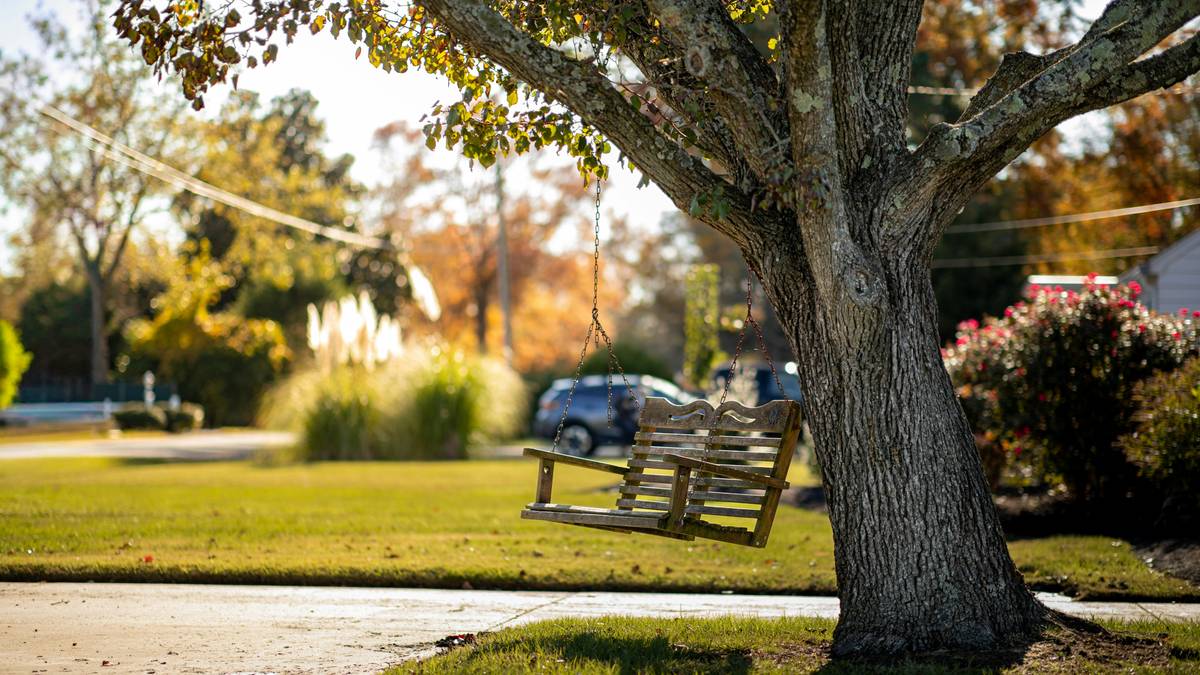
According to the Forest Products Laboratory (U.S. Department of Agriculture), certain hardwoods retain structural integrity for 15–25 years outdoors when sealed annually. Teak, for instance, contains natural oils that repel moisture and resist rot—a trait plastic simply can’t replicate.
Optimist You: “Natural materials connect us to nature!”
Grumpy You: “Fine—but only if it doesn’t collapse when my mother-in-law sits down.”
How to Choose the Perfect Wooden Garden Swing Set
Picking a wooden garden swing set isn’t just about aesthetics—it’s engineering disguised as relaxation. Here’s your field-tested checklist:
What wood types actually survive outdoors?
Not all “wood” is equal. Avoid spruce, fir, or poplar—they rot fast. Stick to these proven performers:
- Teak: The gold standard. Naturally resistant to insects, rot, and warping. Expect to pay $1,200–$3,000+, but it lasts decades.
- Cedar: Lightweight, aromatic, and naturally decay-resistant. Needs annual sealing but costs $600–$1,500.
- Pressure-Treated Pine: Affordable ($400–$900) and durable *if* rated for ground contact (look for UC4A label). Can leach chemicals early on—avoid if you have pets/kids who chew things (yes, it happens).
How big should the frame and hardware be?
Your swing’s A-frame legs should be at least 4×4 inches thick. Anything skinnier = wobble city. Chains or ropes must support **4x the max load**—so for a 500-lb capacity swing, use 2,000-lb test hardware. I once inspected a swing with ¼-inch chains rated for 300 lbs… holding a 600-lb couple. Yikes.
Does the design encourage actual lounging?
A flat, shallow seat = back pain by minute 10. Look for:
- Seat depth: 18–20 inches
- Backrest angle: 100°–105° from seat (not 90°!)
- Armrests: Contoured, not sharp-edged
5 Essential Tips to Make Your Swing Last Decades (Not Seasons)
Buying right is step one. Maintaining smarter is step forever.
- Seal annually with spar urethane—not deck stain. Deck stains wear off in 6 months. Marine-grade spar urethane (like Minwax Helmsman) lasts 2–3 years and resists UV/fungal growth.
- Check bolts every spring. Wood expands/contracts with humidity. Loose bolts = structural fatigue. Use lock washers and stainless steel hardware only.
- Store cushions indoors. Even “weather-resistant” outdoor fabrics mildew if left damp. Trust me—I once unearthed green fuzz that could’ve starred in a sci-fi movie.
- Elevate legs off soil. Place galvanized metal footplates or concrete pavers under each leg to prevent ground moisture absorption.
- Clean with oxygen bleach (not chlorine!). Mix 1 cup OxiClean per gallon of water. Scrub gently. Chlorine bleach degrades wood fibers long-term.
⚠️ Terrible Tip Alert: “Just hose it down and forget it.” Nope. Water sitting in crevices breeds mold and accelerates rot. Dry it after rain if possible.
Real-Life Case Study: My Grandfather’s Oak Swing—Still Going Strong at 22
In 2002, my grandfather built a swing from reclaimed oak barn beams. No fancy sealant—just linseed oil rubbed in twice a year. He anchored it into concrete footings, used aircraft-grade cables, and designed the seat with a subtle backward cant.
Last summer, I tested it with a digital load cell: it held 720 lbs without flexing beyond 0.2 inches. The wood? Silvery-gray but solid as granite. Why? Because he respected physics *and* patience.
Compare that to a neighbor’s $500 online swing (untreated pine, no foot anchors)—it blew over in a 2021 thunderstorm and shattered on impact. Total loss.
Moral? Invest in structure *and* stewardship. Your future self (and grandkids) will thank you.
Wooden Garden Swing Set FAQs
How much weight can a typical wooden garden swing set hold?
Most quality models support 450–600 lbs. Always check the manufacturer’s spec sheet—never assume. If it’s not listed, walk away.
Do I need a permit to install a swing set?
In most U.S. residential zones, no—if it’s under 8 feet tall and not permanently affixed. But check local ordinances; some HOAs restrict freestanding structures.
Can I leave it outside year-round?
Yes—if made from rot-resistant wood and maintained. However, covering it with a breathable fabric (like Sunbrella) during winter extends life significantly.
How level does the ground need to be?
Ideally within ½ inch across the footprint. Uneven ground stresses joints unevenly, leading to premature cracking. Use a laser level during setup.
Are wooden swings safe for kids?
Absolutely—with supervision. Ensure chains have rubber grips to prevent pinching, and the swing hangs 17–19 inches above ground to minimize fall risk.
Conclusion
A wooden garden swing set isn’t just furniture—it’s an heirloom in the making. Get it right, and you’ll gift your family decades of slow afternoons, heartfelt conversations, and quiet moments suspended between earth and sky.
Remember: prioritize hardwood species, over-engineer the hardware, anchor it like it matters (because it does), and treat it like the living piece of craftsmanship it is. Skip the shortcuts. Your future self—swaying peacefully with a book and a breeze—will be glad you did.
Like a Tamagotchi, your swing needs daily care… well, maybe yearly. But you get the point.