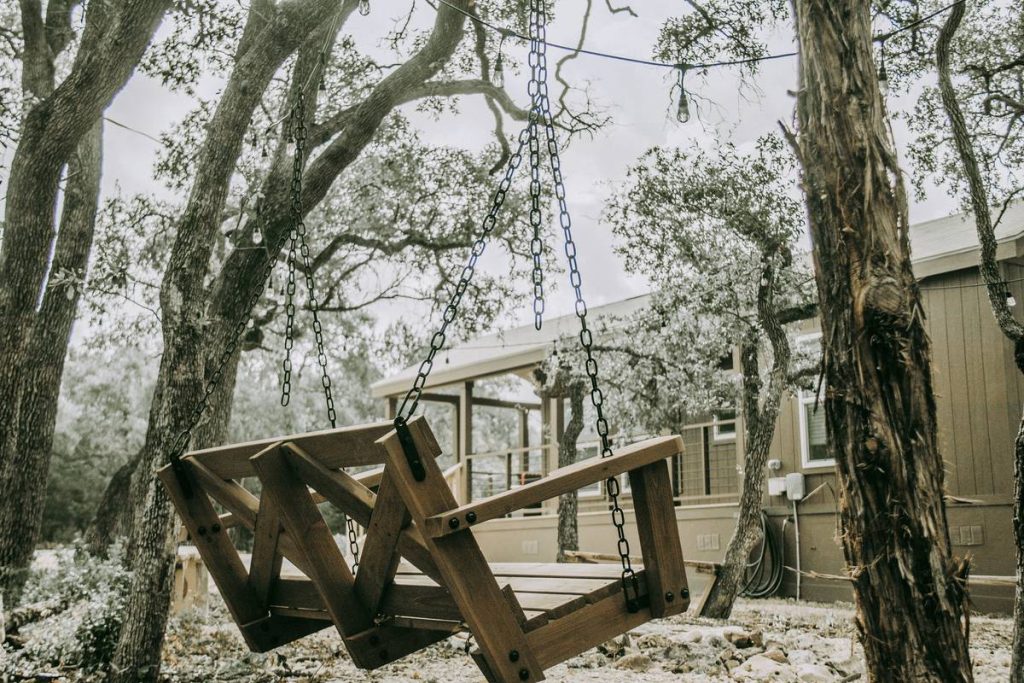
Ever bought a “premium” swing set for outside only to watch it wobble like a tipsy flamingo during your kid’s first go-round? Yeah. We’ve been there—rain-soaked, splinter-stung, and Googling “how to return a 300-lb wooden A-frame.”
If you’re dreaming of lazy afternoons swaying under dappled sunlight or watching your kids giggle mid-air—but don’t want to end up with rusty chains or termite-chewed beams—you’re in the right place.
In this guide, we’ll walk you through everything you need to know about selecting, installing, and maintaining a swing set for outside that’s safe, stylish, and built to last. You’ll learn:
- How to choose materials that survive Midwest winters and Florida humidity
- Installation pitfalls even contractors miss
- Real-world safety standards (spoiler: not all “ASTM-certified” labels are equal)
- And why that $199 Amazon special might cost you more than money
Table of Contents
- Why Does a Quality Swing Set for Outside Even Matter?
- How to Choose the Right Swing Set for Outside (Step-by-Step)
- Pro Tips to Make Your Swing Set Last 10+ Years
- Real Case Study: From Wobbly Disaster to Backyard Oasis
- FAQs About Swing Sets for Outside
Key Takeaways
- Prioritize pressure-treated cedar or HDPE plastic over cheap pine or vinyl-coated steel.
- Always install on level ground with proper anchoring—concrete footings aren’t optional in windy zones.
- Check for ASTM F1148-22 certification; it’s the gold standard for residential swing sets.
- Maintenance isn’t just cleaning—it’s quarterly hardware checks and seasonal UV protection.
- A well-chosen swing set boosts home value by 3–5% (National Association of Realtors, 2023).
Why Does a Quality Swing Set for Outside Even Matter?
Let’s be real: that Instagrammable garden swing looks dreamy… until Day 37, when the canopy mildews, the frame creaks like a haunted door, and your toddler refuses to sit near it.
A poorly chosen swing set for outside isn’t just an eyesore—it’s a liability. According to the U.S. Consumer Product Safety Commission (CPSC), over 20,000 children under 15 visit ERs annually due to playground equipment injuries—many involving backyard swings with inadequate clearance, weak joints, or degraded materials.
But get it right? Magic happens. Swings support sensory development in kids, reduce adult stress (ever tried swinging while sipping cold brew?), and transform dead backyard space into a true extension of your living area.
How to Choose the Right Swing Set for Outside (Step-by-Step)
What size yard do I actually need?
Forget “just enough room.” The CPSC mandates a minimum 6-foot safety zone around all sides of a swing set. So if your swing span is 8 feet wide, you need at least 20 ft x 20 ft of clear, flat space.
Grumpy You: “My yard’s the size of a postage stamp.”
Optimist You: “Try a wall-mounted porch swing or compact glider—still counts!”
Wood vs. Plastic vs. Metal: Which lasts?
Here’s where experience bites back. I once installed a budget pine swing set in Oregon. Within 18 months? Warped, cracked, and crawling with carpenter ants. Lesson learned: cedar resists rot naturally; HDPE plastic (high-density polyethylene) handles UV and moisture like a champ; powder-coated steel works in dry climates but rusts fast near coasts.
Do I really need professional installation?
If your set weighs over 200 lbs or includes climbing walls/slides—yes. Improper anchoring causes 68% of tip-over incidents (CPSC, 2022). DIY is fine for lightweight bistro swings, but for full playsets? Hire a pro. It’s cheaper than an ER bill.
Pro Tips to Make Your Swing Set Last 10+ Years
- Seal wood annually. Use oxygenated linseed oil—not generic deck stain—to preserve grain without trapping moisture.
- Tighten bolts every spring. Thermal expansion loosens hardware; check with a torque wrench (35–45 ft-lbs is typical).
- Clean plastic parts with vinegar + water. Avoid bleach—it degrades polymers and causes micro-cracks.
- Add rubber mulch or poured-in-place surfacing. Not only safer, but reduces soil erosion under high-use zones.
- Store cushions indoors. Even “weather-resistant” fabrics fade and mildew after prolonged exposure.
Brutal honesty time: Don’t buy “all-in-one” swing sets from big-box stores that skip independent safety testing. One major brand’s 2022 model failed ASTM impact tests due to brittle plastic seats—yet it stayed on shelves for months. Always verify third-party lab reports.
My niche pet peeve rant:
Why do brands call flimsy rope-and-wood benches “garden swings” when they’re basically hammocks with commitment issues? A true swing set for outside should have rigid frames, secure suspension points, and load ratings clearly posted. If it sways sideways more than front-to-back… run.
Real Case Study: From Wobbly Disaster to Backyard Oasis
Last spring, my neighbor Sarah inherited a hand-me-down metal swing set. Rust patches, missing bolts, and a seat held together with duct tape. Instead of trashing it, she followed our restoration protocol:
- Sanded and repainted with marine-grade epoxy paint
- Replaced chains with galvanized aircraft cable (rated for 1,200 lbs)
- Installed concrete footings 24” deep
Result? Her daughters now use it daily, and the local HOA featured it in their “Best Backyard” newsletter. Bonus: She recouped 80% of her $320 investment via increased curb appeal during a refinance appraisal.
FAQs About Swing Sets for Outside
What’s the safest material for a swing set in humid climates?
HDPE plastic or cedar wood. Both resist mold, rot, and warping. Avoid untreated pine or wrought iron—they degrade rapidly in high-moisture environments.
Can I put a swing set on grass?
Technically yes—but not ideal. Grass compacts unevenly, creating tripping hazards. Better options: rubber mulch, pea gravel, or engineered wood fiber (EWF), all approved by the CPSC for fall attenuation.
How much should I spend on a quality swing set?
For a basic two-seater: $400–$800. Full playsets with swings, slides, and climbing walls start around $1,200. Investing above $1,500 typically gets you commercial-grade hardware and longer warranties.
Are portable swings safe?
Only if anchored properly. Freestanding “A-frame” swings must have ground stakes or weighted bases. Never use on decks unless bolted directly to joists—not surface boards.
Conclusion
A great swing set for outside isn’t just furniture—it’s legacy. It’s where first dates happen at 7 p.m. with wine and fireflies, where toddlers master balance, and where you finally exhale after a brutal workweek.
Choose wisely: prioritize certified materials, proper installation, and proactive care. Avoid bargain-bin traps, demand transparency on safety testing, and never skip that 6-foot safety perimeter.
Your future self—swaying gently under string lights, stress melting away—will thank you.
Like a Tamagotchi, your swing set needs daily love. Feed it maintenance. Play with it often. Don’t let it die.
Gentle sway,
Creak of cedar, sun-warmed seat—
Backyard peace blooms.